
Guides · Sat, Nov 21, 2026
Torrey Pines while the reserve is closed: the beach, the Extension and the March reopening
Torrey Pines State Natural Reserve, the briefed Wednesday topic's intended subject, is closed for a construction project from 22 September 2026 through February 2027, with the park road, the upper parking lots and every main reserve trail shut to vehicles and pedestrians, and full access expected by 1 March 2027. This piece replaces the museum circuit topic that duplicated the live Balboa Park guide: it tells readers what is still open now (Torrey Pines State Beach and the reserve's Extension), and it works the closed reserve's trail system in order so a March 2027 visit can be planned properly.
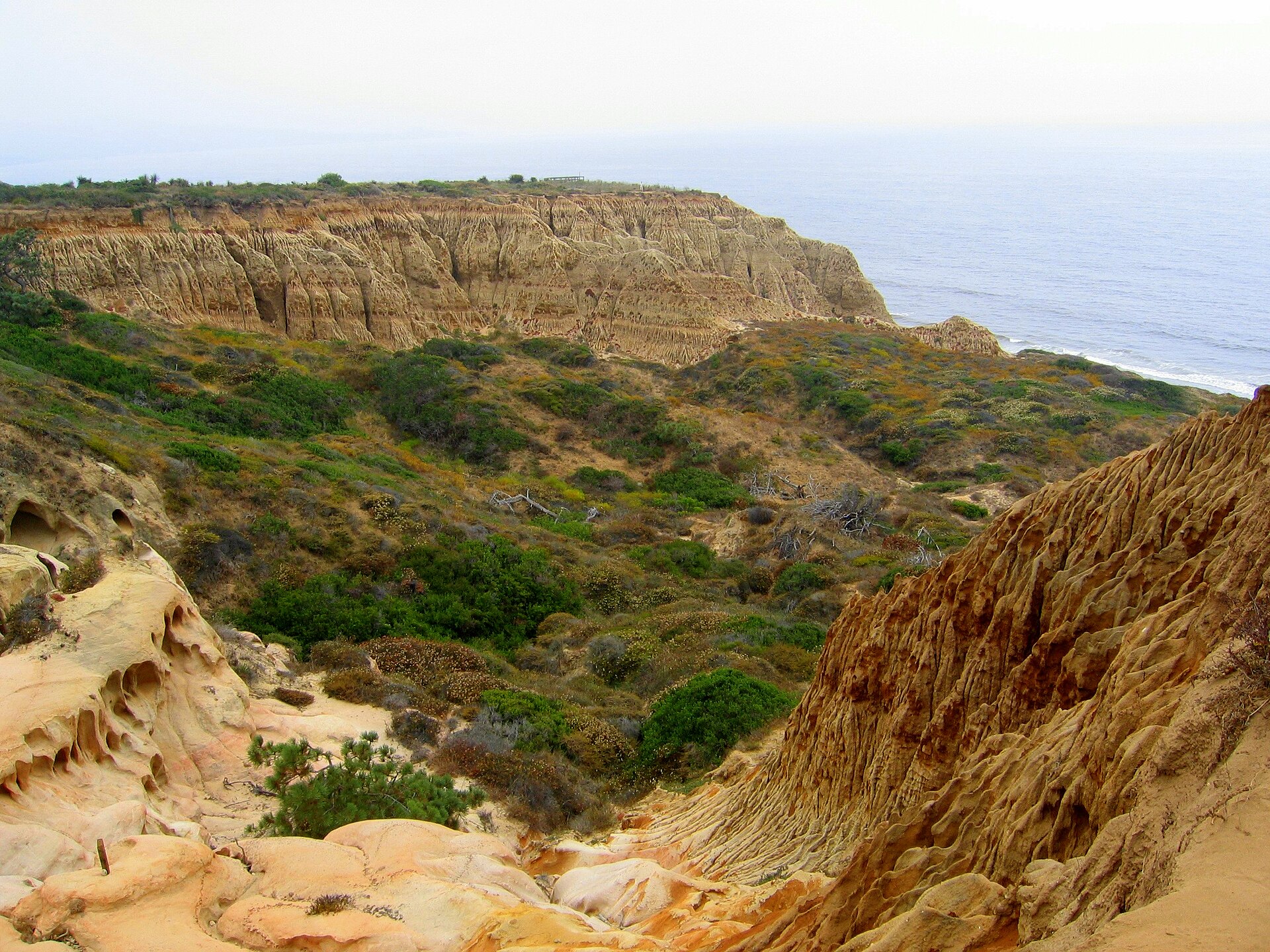
The honest position comes first, because a guide that buried it would waste somebody's morning. Torrey Pines State Natural Reserve is closed. California State Parks' official park information page states that the reserve is closed from 22 September 2026 through February 2027 for a construction project: the park road, the upper parking lots and all of the main reserve's trails are closed to vehicles and pedestrians, and full access is expected by 1 March 2027. The cliffs, the famous pines and the trail network that make this one of the great urban nature reserves in America are, for this winter, behind a fence.
What has not closed is the shoreline at its feet, and a second, quieter piece of the reserve across the lagoon. So this guide does two jobs. It works out what a Torrey Pines visit still looks like between now and the end of February, on the beach and in the Extension. And it walks the closed reserve's trails in the order you should walk them when the gates reopen, because March is close enough to plan for, and the first weeks after a reopening are exactly when a famous reserve rewards people who arrive knowing what they are doing.
What is open now: the beach
Torrey Pines State Beach runs along the foot of the cliffs, and State Parks is explicit that it stays open through the closure, along with the two parking lots that serve it. The South Beach lot, below the main reserve entrance, is the larger and busier of the two, with the kiosk staffed from 9am to sunset and day use priced by demand between US$15 and US$25 per vehicle. The North Beach lot, up by the lagoon mouth, runs US$10 to US$25 on the same demand based scale, and a State Parks annual pass is accepted at both. Before the kiosk opens, payment is by the QR codes posted in the lots.
The beach itself loses nothing to the closure. It is a long, flat, walkable strand under those eroded sandstone bluffs, good for the two things it has always been good for: a serious walk, north toward Del Mar or south under the cliffs toward Black's Beach as the tide allows, and a swim or a sunset in a setting that feels far wilder than its ZIP code. What you cannot do this winter is climb from the beach into the reserve, because the trails that connect them, the Beach Trail included, are on the closed side of the fence. Treat the beach as a beach this season, check the tide before you walk far under the cliffs, and let the bluffs be scenery rather than a route.
What is open now: the Extension
The piece of the reserve most visitors never find is the Torrey Pines Extension, the reserve's second unit a short distance north, across Los Penasquitos Lagoon, and State Parks' current conditions list the Extension as open while the main reserve is shut. It is smaller, quieter and more local in feel: sandstone ridges, maritime chaparral and the same rare pines, on trails with names like Mar Scenic and Margaret Fleming, looking out over the lagoon and the ocean. There are no facilities to speak of and no crowds at all, and parking is on the surrounding residential streets, which asks for the obvious courtesies. For anyone who had their heart set on walking among Torrey pines this winter, this is the walk that still exists, and on a clear morning it is a genuinely good one rather than a substitute.
The reserve you are planning for
When it reopens, the reserve protects about 2,000 acres of coastal plateau between La Jolla and Del Mar, designated a National Natural Landmark in 1977, and it exists for one tree. The Torrey pine is the rarest pine in North America, and this subspecies grows naturally only here and on a small strip of coast immediately north in Del Mar, with a related subspecies on Santa Rosa Island in the Channel Islands. The trees are wind sculpted, improbable looking things, and the reserve's whole trail system is arranged as a series of walks through their habitat, with the eroded badlands and the ocean doing the rest.
The reserve's normal rhythm, from State Parks' own information, is a gate that opens at 7.15am and a park that closes at sunset, which in the fall and winter months means about 5pm. That rhythm shapes the March plan: this is a morning reserve. Arrive early, walk the trails in the cool of the day, and be down at the beach by the time the light turns.
Worked in order, the trails run like this. Start with the Guy Fleming Trail, a loop of about two thirds of a mile and the reserve's greatest hits in miniature: two ocean overlooks, the widest variety of habitat in the park, from coastal sage scrub to the pine groves themselves, and the easiest walking of the set. It is the right first walk for anyone, and the right warm up for everyone. Continue to the Parry Grove Trail, a half mile loop that descends more than a hundred stone steps into a grove planted a century ago, with a small native plant garden at its head; the steps make it the most sheltered and the most intimate of the walks. Then take the Razor Point Trail out to its viewpoint, where the eroded sandstone formations are at their most dramatic above the beach. The Beach Trail is the reserve's signature descent, about three quarters of a mile dropping roughly 300 feet through the badlands to the sand, with stairs at the end, so that a reopening visit can be built as a loop: along the plateau, down to the beach, and along the shore back to the lots. The longest walk is the Broken Hill Trail, about 1.3 to 1.4 miles depending on the fork, through the reserve's least visited country to an overlook above the cliffs. State Parks warns that the steeper trails close after rain, so a March plan should hold a wet weather alternative, and every trail in the reserve is a stay on the path proposition: the sandstone and the habitat are both fragile, and the fences are not decoration.
The March plan, worked out in advance
Because the reopening is a date to plan around rather than a rumor to chase, here is the visit this guide is quietly building toward, assembled from the reserve's own published pattern. Take a weekday in the first half of March if you can, because the first weekends after a famous reserve reopens belong to everyone who waited. Arrive before 9am, while the South Beach kiosk is opening and the plateau is still cool, and walk the plateau first: Guy Fleming for the overview, Parry Grove for the shade, Razor Point for the formations. Descend the Beach Trail late in the morning, eat whatever you brought on the sand, and walk the shoreline back along the beach you used as scenery all winter. Finish in the Extension if the legs allow, or save it for the lagoon light at the end of the day. Nothing in that plan needs a booking, a ticket or a queue. It needs only the gate open, which is why the last section of this guide is the one to act on.
Making a trip of it
The reserve sits inside the La Jolla orbit, and the natural base for a reopening trip is La Jolla itself, close enough for a dawn start and with the village to come back to. Our beach guide places Torrey Pines among the city's beaches chosen by purpose, and the winter whale season is the other reason to be on this coast in the coming months, as our whale watching season guide sets out; the Extension's lagoon lookouts make a decent free vantage while the main reserve is shut. For a March reopening stay:
Stay in La Jollavia Booking.com · affiliate link
One rule above all others for this winter: check the park's official page before you travel, on the day, not from memory. Closure dates on construction projects move in both directions, State Parks posts the current conditions on the Torrey Pines park information page, and the difference between a reopened reserve and a still fenced one is the difference between the two halves of this guide. Set a San Diego What's On alert and we will email you when the reopening date is confirmed and the first post closure events land on the calendar.
More reading on the articles page, or go straight to the events calendar.