
Guides · Mon, Nov 16, 2026
Whale watching season: San Diego in January
January is the peak of the gray whale migration past San Diego, when the southbound flow from the Arctic to the lagoons of Baja California passes close enough to Point Loma to be watched from a cliff as well as from a boat. What the boats actually see, how a morning sailing differs from an afternoon one, the seasickness conversation nobody has with you at the dock, and the free shore based alternative at Cabrillo National Monument.
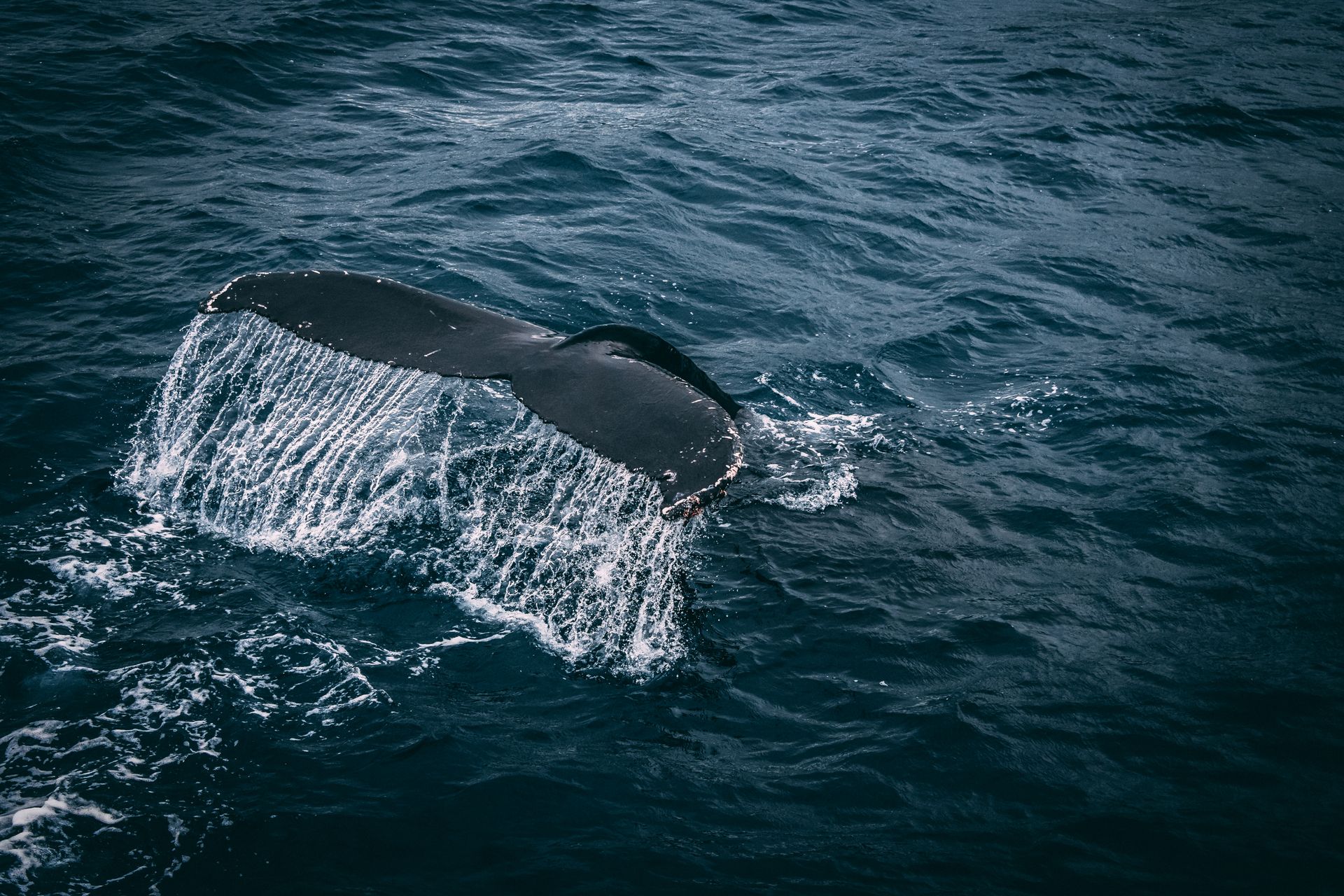
Every January, one of the longest migrations on earth files past San Diego close enough to shore to watch from a cliff. The eastern North Pacific gray whales spend their summer feeding in the Arctic, then swim south along the North American coast to spend the winter in the warm, shallow lagoons and bays of Baja California, Mexico, where the calves are born. NOAA Fisheries puts the round trip at about 10,000 miles, and in some cases upwards of 14,000, which makes it one of the longest annual migrations of any mammal. San Diego sits directly on the route, and the whales pass Point Loma within sight of land. January, and specifically the middle of it, is when the southbound flow is at its strongest. This guide is about doing that month properly: what a boat trip actually gives you, what it cannot promise, and how the same migration can be watched for the price of a park entry from the cliffs above it.
The season, and why January is the peak
The gray whale season off San Diego runs, in round terms, from mid December through March. The National Park Service, which watches this migration from Cabrillo National Monument at the tip of Point Loma, puts it precisely: most whales pass San Diego in late December, January and February, and mid January is the peak time for the migration. The shape of the season matters. The whales you see in January are southbound, traveling with purpose toward Baja, where NOAA records calves being born from early January to mid February. The return trip runs from mid February into spring, mothers with new calves among the last to travel, and from shore those northbound whales are generally too far out to see well, which is why the Park Service's whale watching is a winter story, not a spring one. The San Diego Tourism Authority has counted as many as 200 whales per day passing the city's shores during the peak in mid January. Treat that as a measure of the flow, not a promise for your sailing: the migration is a river, and any given boat samples a few hours of it.
What a boat actually sees
Forget the brochure photograph for a moment. A gray whale encounter from a boat usually arrives in pieces, and knowing the pieces is what turns a grey sea into a sighting. First, the blow: a bushy spout of breath above the surface, visible well before the animal itself, which is why every naturalist aboard watches the horizon rather than the water beside the boat. Then the back: a mottled grey arc, patched with white barnacle scars and, as the Park Service's watchers will tell you, with no dorsal fin at all, just a low hump and a row of knuckles along the spine. Then, on a good encounter, the dive: the back arches, and the broad tail fluke lifts clear of the water, sheets with spray, and slides under. That fluke is the photograph everyone on the rail is waiting for, and it is also the goodbye: a fluking gray is going deep and will not resurface where you left it.
Around the whales, the supporting cast is reliable in a way the whales themselves are not. Dolphins, sea lions, seals and seabirds are spotted on these cruises as a matter of routine, and the winter sailings out of San Diego harbor pair the whale search with narration from volunteers of the San Diego Natural History Museum, who know this coast and its animals properly. The honest limits, stated once: no operator can guarantee a whale. The best run operations say so in their own terms, and the cruise buttoned below handles a blank day the fair way, with a complimentary ticket for another trip if no whales are sighted. Book it as a morning or afternoon on the Pacific with a good chance of gray whales in January, not as a whale delivery service, and the day cannot really disappoint you.
The wired cruise for this site sails from Navy Pier, at 970 North Harbor Drive beside the USS Midway, on a large vessel with indoor and outdoor seating. In the winter season it offers a morning sailing, boarding at 9.15am for a 9.30am departure, and an afternoon sailing, boarding at 1.15pm for a 1.30pm departure, each running about three hours in the December to April pattern, with free cancellation up to 24 hours ahead:
Book the San Diego whale and dolphin watching cruisevia Viator · affiliate link
Morning or afternoon: the trade-offs
The listings offer both sailings as if they were interchangeable. They are not, and the difference is the Pacific, not the whales. Gray whales travel around the clock and neither sailing owns them; what changes through the day is the sea itself. Mornings off San Diego are, as a general pattern, the calmer water, with the breeze lighter and the surface easier to read for blows, which is why photographers and anyone nervous about motion tend to book early. Afternoons bring the day's breeze onto the water, a choppier ride, and lower, warmer light on whatever you do find, at the cost of a harder search in a broken surface. Neither is a mistake in January. If your stomach is in any doubt, take the morning. If your party cannot be organized before nine, take the afternoon without guilt and spend the saved goodwill on a proper breakfast. What neither sailing forgives is arriving late: the operator asks guests at the meeting point 30 minutes before departure, and a whale boat does not wait.
Seasickness, said plainly
This is the conversation to have before the dock, not during the first swell outside the harbor. Whale watching means leaving the bay for open ocean and spending hours moving slowly in it, because slow is how you search. If you know you are prone to motion sickness, act on it beforehand: the remedies that work are the ones taken before boarding, not the ones a sympathetic stranger offers you at the rail. Choose the biggest vessel available, which the cruise above is, sit or stand amidships where the motion is least, keep your eyes on the horizon rather than a phone, and get fresh air on deck rather than hiding below with the diesel smell. Dress warmer than the harbor suggests, because wind over cold January water strips heat fast, and a person who is cold and queasy blames the sea for both. Children deserve the same honesty scaled down: a January sailing is a long, cold, exciting three hours if whales appear and a long, cold three hours if they do not, so bring the snacks, the layers and the binoculars that turn waiting into a job.
The shore alternative: Point Loma and a pair of binoculars
You do not need a boat. Cabrillo National Monument, at the end of Point Loma, is one of the great shore based whale watching sites on this coast, and in January it is arguably the better first experience. The Park Service directs watchers to the heights around the Kelp Forest Overlook and the Old Point Loma Lighthouse, looking west, where most whales swim in a band that runs from the kelp beds, about three quarters of a mile offshore, out to the horizon. From that height the migration reads as it actually is, a procession rather than an encounter: blows in sequence down the coast, traveling from your right to your left as the animals move south. Bring binoculars, because shore watching is a spotting discipline, and go in good weather, when the Park Service notes your chances are best. The monument holds a Whale Watch Weekend each year in late January or early February, with ranger talks built around the migration. Our Point Loma and Cabrillo guide covers the monument in full, the lighthouse, the tide pools and the trails, and pairs naturally with a January morning: cliffs first, boat on the second day, and you will read the boat trip with educated eyes.
Where to stay for a whale weekend
Base yourself by the water or by the harbor, depending on which trip you are running. Mission Bay suits the family version, flat, calm and resort scaled, an easy drive from both the harbor and Point Loma, and the right answer if the whale day is one day among several. Downtown suits the harbor version: you can walk to the Navy Pier boarding point, eat in the Gaslamp afterwards, and treat the sailing as a city morning rather than an expedition. Both lists below are set to the peak itself, the long weekend in the middle of January:
Search Mission Bay hotelsvia Booking.com · affiliate linkLuxury Mission Bay Staysvia Maison V · our sister company
Search Downtown and the Gaslamp hotelsvia Booking.com · affiliate linkLuxury Downtown and the Gaslamp Staysvia Maison V · our sister company
The whales will pass whether or not anyone is watching. January is simply the month when watching is easiest, closest and most likely to be rewarded, from a rail or from a cliff. Set a San Diego What's On alert and we will email you when whale season sailings, the Cabrillo Whale Watch Weekend and other January events land on the calendar.
More reading on the articles page, or go straight to the events calendar.