
Guides · Sun, Nov 29, 2026
Mission Bay: the water sports basin
Mission Bay Park is the largest aquatic park of its kind in the United States: 4,235 acres in roughly equal parts land and water, 27 miles of shoreline and 19 miles of sandy beach, dredged out of a tidal marsh in the middle of the last century and now the city's working water. This piece works the whole basin as a system: the calm bay side against the ocean side, the coves and islands one by one, the rental and launching logic, Belmont Park's 1925 coaster at its edge, and how to base a stay inside it.
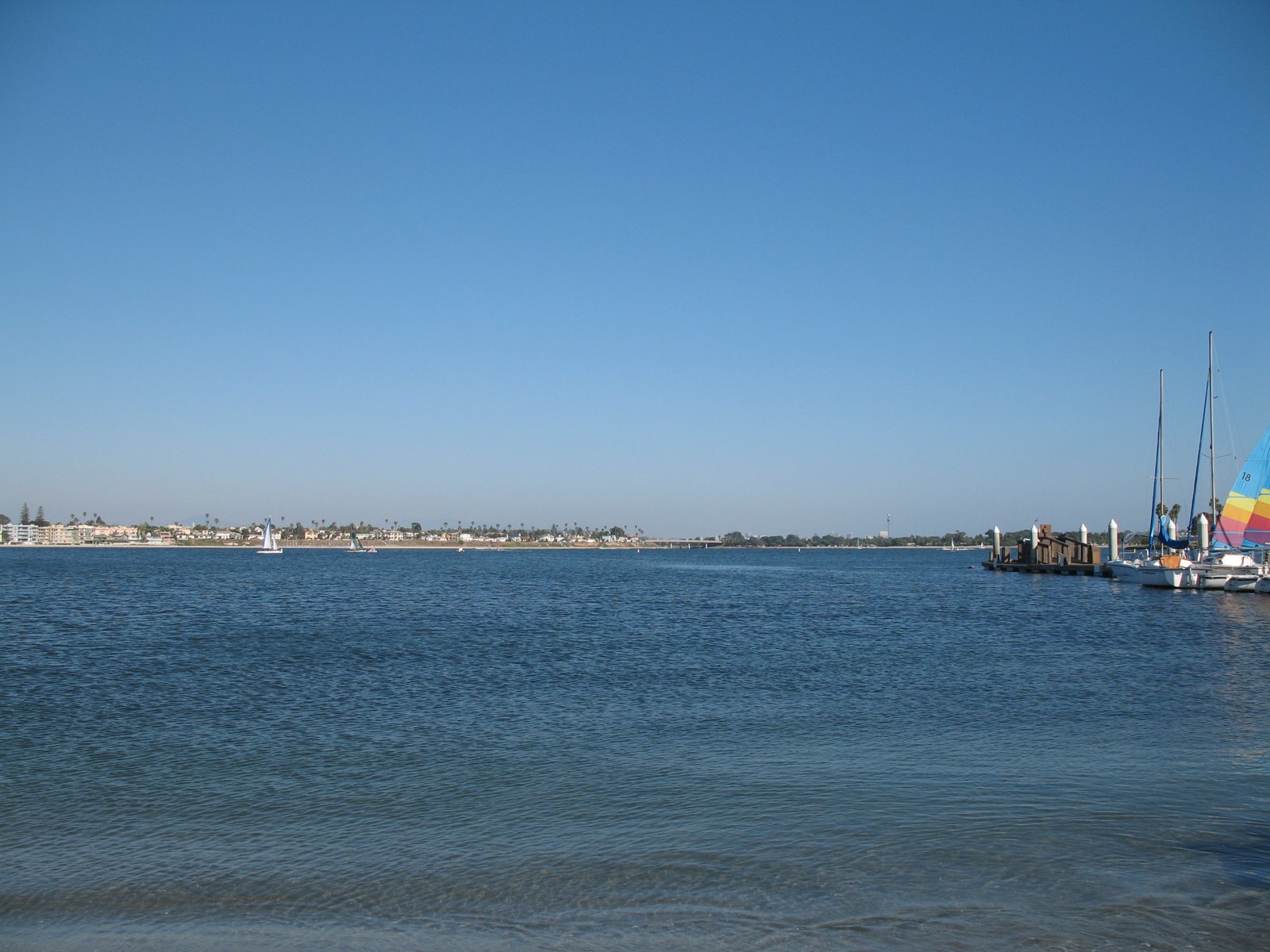
San Diego's most engineered landscape hides in plain sight, because it looks like a gift of nature. Mission Bay is a broad, calm, islanded lagoon folded into the city's coast, made for sailing, paddling and swimming, and almost none of it was there a century ago. The bay began as a marshy tidal inlet the Spanish called a false bay, and the modern Mission Bay Park was dredged and built out of it in the middle of the last century: 4,235 acres in roughly equal parts land and water, the largest aquatic park of its kind in the country on the City of San Diego's own description, with 27 miles of shoreline, 19 of them sandy beach and eight places designated as official swimming areas. It is best understood not as a beach but as a basin, a piece of sheltered water with a city park wrapped around it, and it works completely differently from the ocean coast a few hundred yards west. This guide works the basin as a system, because that is how a day on it succeeds or fails.
Two waters: the bay side and the ocean side
The first decision is which water you want. The bay side is the calm side: no surf, gentle entries, water that warms faster than the ocean and forgives beginners. This is the water for swimming with small children, for learning to paddleboard or kayak, for sailing dinghies and for the flotilla of rental boats, boards and jet skis that works out of the bay's marinas and resort docks all year. The ocean side, across the narrow Mission Beach peninsula, is the surf side, and our beaches guide assigns it its place in the city's coast. Between the two runs the Mission Beach boardwalk and, at its southern end, Belmont Park, the old amusement ground that anchors the ocean side: opened on 4 July 1925 as the Mission Beach Amusement Center, built by the sugar magnate John D. Spreckels to draw the city to his beach lots, and still standing around its founding ride, the Giant Dipper, a wooden roller coaster of 2,600 feet of track that was designated a National Historic Landmark in 1987, closed in 1976, restored and reopened on 11 August 1990, and given a further rehabilitation in 2026 that returned it to service that September. A Mission Bay day that never crosses to Belmont has missed the basin's one piece of working history; a day that never leaves it has missed the bay.
The basin, cove by cove
Worked clockwise from the entrance channel, the bay resolves into a set of distinct coves, each with its own job. Sail Bay, on the northern shore, is the paddling and small boat water, with the resort shore behind it. Crown Point looks south across the widest water and takes the afternoon sun. Ski Beach, on the eastern shore of Vacation Isle, is the powerboat and waterski cove, with launching ramps and the basin's liveliest picnic ground. Paradise Point's resort occupies its own peninsula of lagoons and gardens. De Anza Cove, in the northeast corner, is the quiet local shore, and Fiesta Island, the big island in the bay's middle, is the basin's wild card: a largely undeveloped island of sand roads and open water frontage, famous locally for its off-leash dog beach and for the youth and aquatic camps on its shores, and the place to come when the rest of the basin is full. The pattern to hold is that the bay is zoned by custom rather than by fence: swimmers, paddlers, sailors and powerboats each have their water, the designated swimming areas are marked and lifeguarded in season, and the visitor who picks a cove by the activity they actually want, rather than by the first car park with a space, will have the day the brochures promise.
Moving around the basin
The basin is best read at walking and cycling speed. A shoreline path runs along much of the park's edge, linking cove to cove past the lawns and the resort shore, and the flat, water-level circuit is the way the basin explains itself: you see the zoning happen, swimmers inside their buoys here, a sailing class tacking there, a rowing shell sliding past at dawn speed, the powerboats gathering at the ramps as the day warms. The bay's quieter corners hold what the dredgers left behind, patches of surviving marsh and mudflat at the sheltered edges, and with them the bay's second population: herons and egrets working the shallows, terns over the water, and in the winter months the migrant birds that use this coast as a service station on their way down the Pacific. None of it requires equipment, a booking or a plan beyond a pair of shoes and a decision about which shore to start on. Do the path in the early morning, before the rentals launch, and the basin belongs to the rowers, the birds and you.
A day on the basin
The basin rewards an early start and a simple shape. Swim and paddle in the morning, when the water is glassiest and the rental docks are quiet, from Sail Bay or the Crown Point shore. Take the middle of the day on land: the bay's shoreline parks are built for it, with lawns, picnic shelters and fire rings that are claimed on a first-come basis, and the Mission Beach boardwalk is the basin's lunch run. Cross to the ocean side in the afternoon for the surf, the boardwalk and a ride on the Giant Dipper as the light starts to lean, then come back to the bay shore for the end of the day, because the basin faces its sunsets across calm water and the fire rings are lit by then. Two rules, stated once. Alcohol is not permitted on San Diego's beaches or in its bayside parks, a city rule that is enforced and shapes the basin's family feel, so plan the picnic accordingly. And the bay is a boating basin with marked channels and speed zones, not an empty lake: swimmers stay inside the designated areas, paddlers stay alert near the ramps and the channel, and everyone gives the rental fleet, which is heavy with first timers, a wide and forgiving berth. Stay for the end of the day if the plan allows it. The basin faces west across its own calm water, the resorts light up along the northern shore, the last sailboats drift in under the bridges, and the fire rings on the sand, lit one by one as the light fails, turn the working water sports basin back into what it also is: the city's front garden, with the tide out and the kettle on. The basin's one big resident attraction, SeaWorld San Diego, stands on the southern shore and has its own guide in this series; it pairs with a bay day across a two-day stay rather than competing with one.
Basing inside it
Mission Bay is one of the few San Diego neighborhoods where the stay is the strategy: the resorts and hotels stand directly on the park's shores, the water is the view and the activity, and a family based here can run beach, bay and SeaWorld days without ever really driving. It is the base this site's family guide already builds its sample trip around, and for a water-first visit it beats downtown on everything except restaurants:
Stay on Mission Bayvia Booking.com · affiliate link
Mission Bay is San Diego's proof that a landscape does not have to be natural to be loved. The city dug itself a bay, zoned it by custom, filled it with boats and swimmers and one very old roller coaster, and has been spending its weekends there ever since. Spend one of yours the same way. Set a San Diego What's On alert and we will email you when the bay's regattas, paddle events and summer lifeguard dates land on the calendar.
More reading on the articles page, or go straight to the events calendar.