
Guides · Wed, Nov 11, 2026
Balboa Park: the complete guide to San Diego's green heart
A 1,200-acre park holding 17 museums, a Spanish Colonial Revival exhibition core, gardens within gardens and the zoo at its northern edge. How Balboa Park is laid out, what is free and what is ticketed, how the Explorer Pass works, and how to structure one good day without trying to do it all.
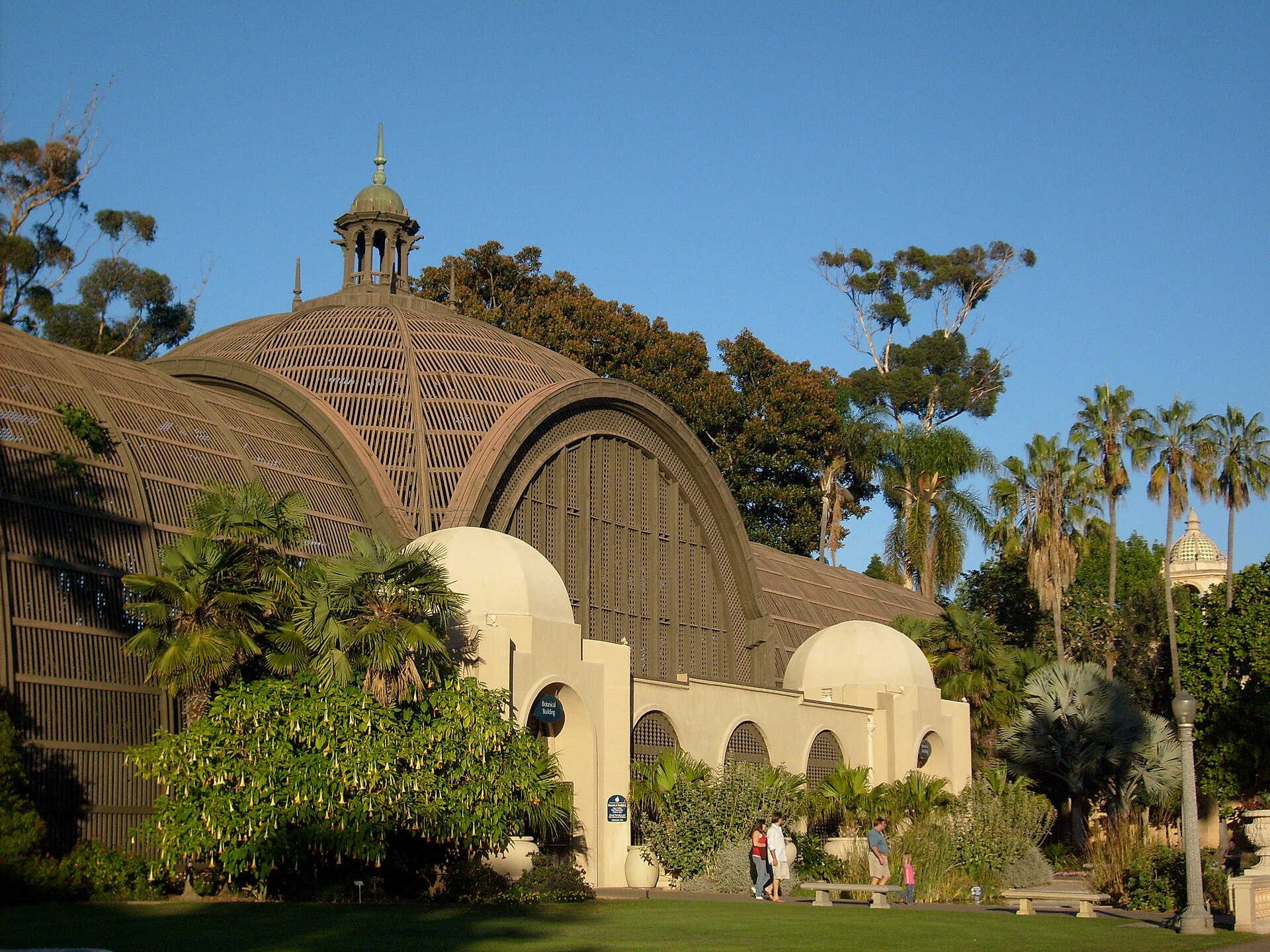
Balboa Park is not a park with a museum in it. It is a small cultural city that happens to be green: 1,200 acres just north east of downtown San Diego, holding 17 museums and cultural institutions, theaters, gardens and trails, with the San Diego Zoo at its edge. The grounds are City-owned, free to enter and open 24 hours a day. Everything else, the museums, the gardens that charge, the performances, runs on its own clock and its own ticket. Plan it as a district, not an attraction, and it becomes the best day in San Diego. Try to complete it and it becomes an exhausting one.
How the park is laid out
Think of the park in three bands. The western band, along Sixth Avenue and across the Cabrillo Bridge, is the formal entrance: you cross the bridge over a canyon and arrive at El Prado, the east to west promenade that is the park's spine. The central band is the Cultural District, where El Prado and the Plaza de Panama hold the densest cluster of museums, the Botanical Building and the theaters. The eastern and southern bands are looser and greener: the Spanish Village Art Center, the Spreckels Organ Pavilion, the Japanese Friendship Garden in its canyon, the golf courses, the lawns and the trails that most visitors never reach. The zoo occupies the northern edge, reached from Park Boulevard and Zoo Drive.
That layout decides your day. Almost everything a first visitor wants sits within a ten-minute walk of El Prado, and the distances that tire people are the parking lot to El Prado walk and the zoo to museum walk, not the distances between museums. Park once, or arrive once, and stay on foot.
The Spanish Colonial core: El Prado and the exposition buildings
The buildings that make Balboa Park look like Balboa Park were built for the Panama-California Exposition of 1915 to 1916, held to celebrate the opening of the Panama Canal, and kept afterwards because San Diego had the sense not to demolish them. The style is Spanish Colonial Revival at its most theatrical: ornate facades, tiled domes, arcades and courtyards, centered on the California Building and its tower, now the Museum of Us, which you can see from across the city.
Walk El Prado slowly first, before you enter anything. The Botanical Building, the large lath structure facing the lily pond, is the photograph everyone takes and, on a weekday morning, a quiet room of palms and orchids. The Timken Museum of Art, also on the Prado, is always free, a useful fact on a day when ticket costs are adding up. The Plaza de Panama, once a parking lot and now a pedestrian plaza, is the park's living room: sit there with a coffee and watch the buskers, the wedding photographs and the museum queues, and you understand the park's double life as both a cultural campus and San Diego's front garden.
The museums cluster: choosing, not collecting
Seventeen museums is a catalogue, not a day. Choose by interest, and choose two, three at the most, for a full day.
On El Prado itself, the San Diego Museum of Art at 1450 El Prado holds a collection of more than 32,000 works, from 3000 BC to the present, and describes itself as the region's largest and most visited art museum; admission to its May S. Marcy Sculpture Court and Garden is free. A few doors east, the San Diego Natural History Museum, known locally as The Nat, runs five floors of exhibitions over a research collection of more than 8 million specimens, with giant screen films included in general admission; it opens daily from 10am to 5pm. Around them sit the Museum of Us, the Mingei International Museum of folk art and craft, the San Diego History Center, the Model Railroad Museum, the Fleet Science Center and, further south in the Palisades area, the San Diego Air and Space Museum and the Automotive Museum. The Comic-Con Museum, in the same southern cluster, is the one that surprises visitors who think the park is only about older culture.
The honest advice is to pair one large museum with one small one. The Art Museum plus the Timken, or The Nat plus the Model Railroad Museum, makes a day with air and lunch in it. Two large museums back to back makes a day of reading labels while standing up.
Free versus ticketed, and the Explorer Pass
The park itself, its grounds, gardens, trails and plazas, carries no admission fee, and a satisfying Balboa Park day can cost nothing: El Prado, the Botanical Building and lily pond, the sculpture garden, the Timken, the organ concert if your timing is right, and miles of walking. The Spreckels Organ Pavilion hosts free Sunday concerts in the park's long standing tradition; check the park calendar for the date you are there, because times and programs vary.
Individual museums charge their own admission, and that is where the Balboa Park Explorer Pass earns its mention. The pass is sold by the park itself, not by this site, and comes as a one-day Limited Pass covering four museums, a seven-day Parkwide Pass covering up to 16 museums, and an annual pass. It does not include the San Diego Zoo or the Comic-Con Museum. If you plan to enter three or more participating museums across a stay, price the pass against the single tickets before you arrive; if you plan one museum and a long walk, single tickets are simpler. Residents Free Tuesdays, the park's rotating scheme under which selected museums offer free general admission to San Diego County residents on Tuesdays, are real but conditional, so treat them as a bonus for locals rather than a plan for visitors.
Gardens, canyons and the park beyond the museums
Balboa Park rewards the visitor who leaves El Prado. The Japanese Friendship Garden descends into its canyon in terraces of stone, water and planting, and is the quietest ticketed hour in the park. The Alcazar Garden, modelled on gardens in Seville, sits beside the Prado in formal beds and tilework and costs nothing. The rose and desert gardens across Park Boulevard, reached by a footbridge, are where local gardeners go, and the trails below the Cabrillo Bridge and through Florida Canyon show the other Balboa Park: native planting, canyon paths and almost no one else on them. The Spanish Village Art Center, a courtyard of colored tiles and working studios near the zoo end of the park, is free to wander and is the best place in the park to buy something made by the person selling it.
The zoo, briefly
The San Diego Zoo sits beside the park on Zoo Drive and is a full day in its own right, not a Balboa Park extra. This guide deliberately does not duplicate it: see the zoo's attraction page on San Diego What's On for tickets, the 1-Day Pass inclusions and planning detail, and give it its own day, or at least its own morning, starting at opening.
Book zoo ticketsvia Klook · affiliate link
How to structure one good day
Arrive by 9:30am and walk El Prado while it is quiet. Enter your first, larger museum at 10am when doors open. Lunch in the park, at the Prado restaurant end of the scale or a picnic on the lawns at the other, then your second, smaller museum or the Japanese Friendship Garden in the early afternoon. Spend the last hour the way the park wants to be spent: the Botanical Building again in softer light, the Alcazar Garden, and a slow exit across the Cabrillo Bridge into the Bankers Hill streets for dinner. A guided walk is the efficient alternative for a first morning, because a good guide compresses the park's layout, its exposition history and its museum choices into one circuit and leaves you oriented for the rest of the day.
Book the Balboa Park tourvia Viator · affiliate link
Parking, the free tram and getting there
Parking is the park's live issue, so read this at build and again before you travel. The park's own FAQ states that there are multiple paid parking lots in the Cultural District, that the first three hours are free in the Lower Inspiration Point parking lot, and that other lots require payment, with a free ADA-accessible tram serving the lots. The City's free green tram runs daily, roughly every 10 to 15 minutes in the City's published pattern, from Inspiration Point at Park Boulevard and Presidents Way, stopping at the Plaza de Panama and the Palisades area among others. Rules and charges in this park have changed recently, so check the official parking page on the morning you go rather than relying on any guide, including this one.
Without a car, ride the MTS Trolley to a downtown station and connect by bus: MTS routes including the 7, 120 and Rapid 215 serve the Park Boulevard and downtown edges of the park in published guides, and the hop-on sightseeing trolley stops at Balboa Park and the zoo as stop 10 on its loop. From downtown hotels, a rideshare to El Prado is short and, for a group, often simpler than parking.
Balboa Park is also the park that hosts December Nights, the city's big free December festival, and a rolling program of concerts and exhibition openings through the year. Check the San Diego What's On events calendar before your visit, and set a Balboa Park alert so the next exhibition opening or festival date lands in your inbox.
Base yourself downtown for a Balboa Park day and the park is a short trolley ride away:
Search Downtown and the Gaslamp hotelsvia Booking.com · affiliate linkLuxury Downtown and the Gaslamp Staysvia Maison V · our sister company
More reading on the articles page, or go straight to the events calendar.